






















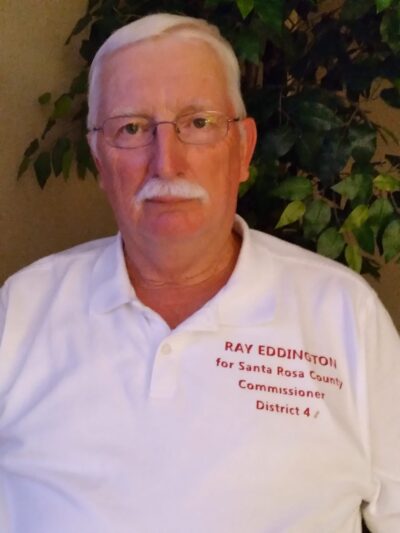
When voters elected Ray Eddington to the Santa Rosa County Commission for the 2022–2026 term, they did so with reasonable expectations: leadership, measurable progress, and a clear vision for the county’s future. Nearly four years later, it is fair—and necessary—to ask a simple question: What has changed because of his tenure?
For many constituents, the uncomfortable answer appears to be: very little.
County commissioners are not ceremonial figures. They wield real authority over land use, infrastructure priorities, transportation planning, public finances, and long-range growth management. Success in the role is not measured by attendance at meetings or routine votes, but by understanding the job, confronting hard problems, and delivering outcomes.
By those standards, Commissioner Eddington’s record is notably thin.
Ignoring the Biggest Problem: Infrastructure and Traffic
The most glaring failure has been the absence of leadership on the single biggest issue facing his constituents: infrastructure and traffic. Roads are overburdened, congestion worsens with each new development, and residents lose hours of their lives to daily gridlock. These impacts are immediate and tangible, yet there has been no visible strategy, sustained advocacy, or ownership of solutions from Commissioner Eddington.
Compounding the problem is disengagement. Commissioner Eddington appears to operate within a cone of silence, often refusing not only to address constituent concerns publicly, but failing to even acknowledge outreach from the people he represents. Calls go unanswered. Emails receive no reply. Representation without responsiveness is not representation at all.
A Troubling Lack of Understanding of Basic Government Functions
Even more concerning than inaction are instances where a lack of understanding of basic governmental roles and responsibilities appears to have influenced consequential decisions.
This was evident in the flawed positive vote to add a toll to the existing Navarre Bridge—a proposal that raised immediate questions about authority, funding mechanisms, and fairness to local residents. Rather than clarifying those issues or pushing back, the vote moved forward, reinforcing the perception of poor due diligence.
Similarly, the handling of the Traffic Data & Engineering (TD&E) study for a new bridge devolved into confusion over something fundamental: who would pay for it. Determining funding responsibility is a core function of county governance, not an obscure technical detail. The public fumble on this issue underscored a troubling lack of preparation and command of the basics.
These are not minor procedural missteps. They are warning signs when decisions involve long-term financial and infrastructure consequences for an entire community.
Reckless Fee Increases and Disregard for Constituents
Commissioner Eddington was also complicit in doubling fees across a range of basic county services, including recreation facilities, aviation facilities, and boat registration. These are not luxury services; they are everyday amenities used by working families, retirees, and small business owners.
During discussion of boat registration fees, when voter concerns were dismissed by another commissioner as a “first world problem,” Commissioner Eddington failed to push back. Allowing such a comment to go unchallenged speaks volumes. How disconnected must an elected official be to tolerate the trivialization of legitimate constituent concerns—especially in a coastal county where boating is not a hobby, but a way of life and, for many, a livelihood?
Leadership is not just about how one votes; it is about what one defends. Silence in moments like this is not neutrality—it is complicity.
No Vision, No Ownership, No Results
Supporters may argue that board actions reflect shared responsibility. But collective outcomes do not automatically translate into individual accomplishment. Effective commissioners leave fingerprints on policy. They ask hard questions, challenge bad assumptions, advocate for constituents, and articulate a clear vision for the future.
There is no such vision attached to Commissioner Eddington’s tenure. No roadmap for managing growth alongside infrastructure. No coherent transportation strategy. No consistent engagement with the people he was elected to serve.
This is not a call for theatrics or reckless policymaking. It is a call for competence, engagement, and results. Voters did not elect a placeholder. They elected a representative expected to understand the job and actively perform it.
As this term nears its end, constituents are justified in asking whether their concerns have been heard at all—let alone addressed. Elections are moments of accountability, when promises are measured against performance.
In this case, the record raises a difficult but necessary question: If four years have produced so little leadership, engagement, and understanding of the basics, what would more time truly change?
Santa Rosa County deserves commissioners who listen, respond, and act. It deserves better than silence.
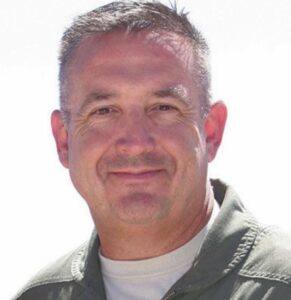
ABOUT THE AUTHOR: Col. Craig J. Walker, USAF (Retired) first moved to Navarre in 1997. During his military career he logged over 4,000 hours in various aircraft and was awarded two Distinguished Flying Crosses (both with Valor), for his actions during Operation Enduring Freedom. In May 2025 he was inducted into the Air Commando Hall of Fame. He’s now retired and living in Holley By The Sea.